What happened at the Olympiad today, in three sentences: India beat Spain 3-1 in Round 4 of the 46th Chess Olympiad in Samarkand on Saturday, September 19, 2026. Arjun Erigaisi played the move of the day, 26.O-O!!, deliberately leaving a knight hanging so he could finish developing his pieces, and went on to win in 36 moves. India now stands at a perfect 4-0, and on Sunday they face the Netherlands, the only other team still perfect.
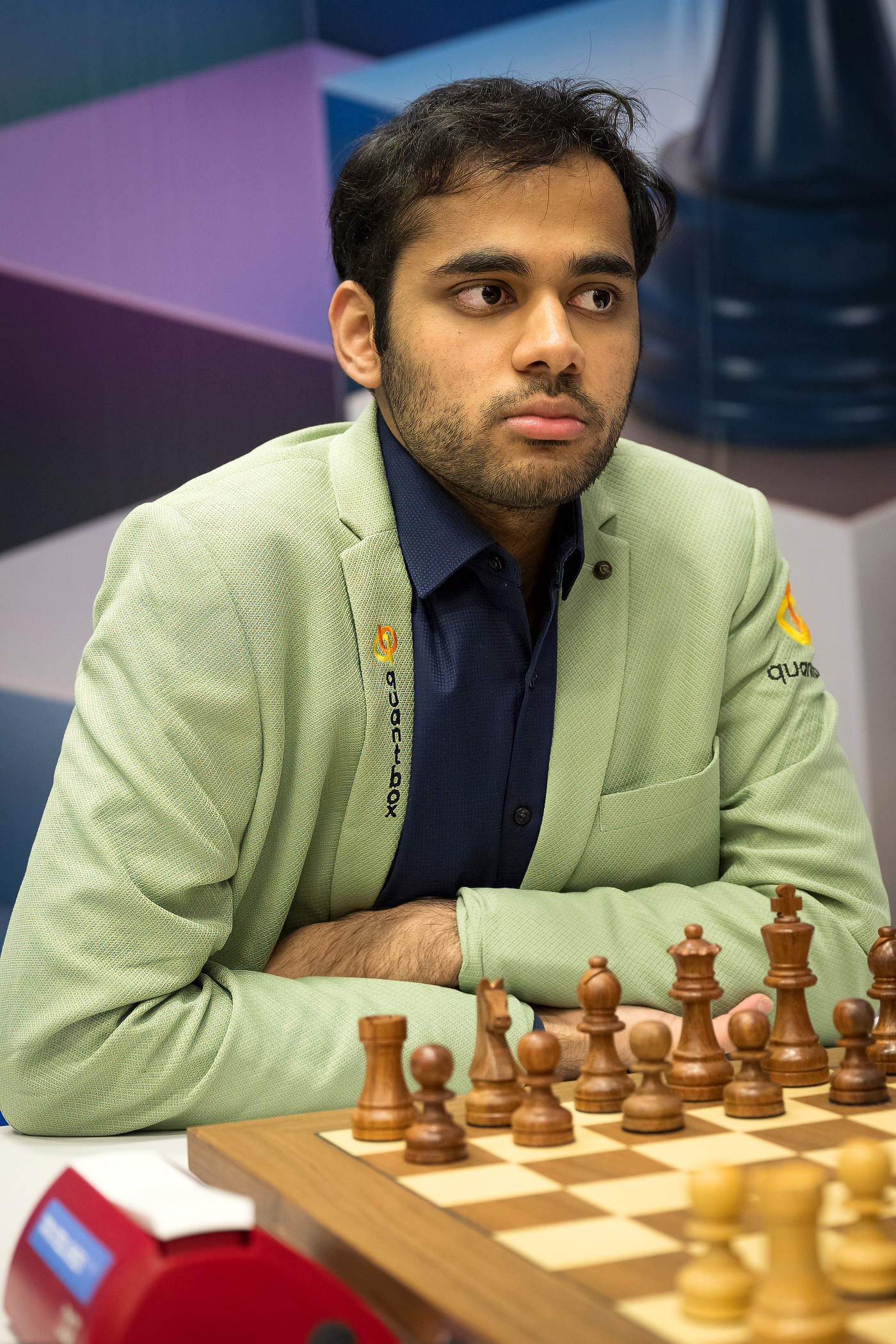
How did India beat Spain 3-1?
Board by board, from the official Round 4 scores:
- Board 1: R Praggnanandhaa drew with David Anton Guijarro.
- Board 2: Arjun Erigaisi beat Maksim Chigaev, 1-0 in 36 moves.
- Board 3: Nihal Sarin drew with Jaime Santos Latasa.
- Board 4: Gukesh Dommaraju, the world champion, beat Alexei Shirov 1-0. That is his third win of the event.
Two draws on boards one and three, two full points on boards two and four. That is how team chess works: you do not need everyone to win. You need enough people to win.
It is also worth remembering how this week started for India. In Round 2, Gukesh drew an Indonesian IM and slipped under 2700 on the live rating list, and we wrote about what club players should steal from a day when the favorite script broke. Two rounds later, the world champion has three wins and the team has not dropped a match. Form is temporary. The work underneath it is what lasts.
What made 26.O-O!! the move of the day?
Picture the position before Arjun's 26th move. His knight on e3 is hanging. Black can take it for free. His king is still sitting in the center of the board, uncastled. Black has just jumped a knight to f5, piling on the pressure.
Almost every club player in the world would spend this move saving the knight or saving the king. Arjun did neither. He played 26.O-O, castling kingside, and left the knight out to dry.
In chess notation, "O-O" means castling kingside: the king steps two squares toward the rook, and the rook jumps over to the other side. It is the only move in chess where you move two pieces at once, and its whole point is king safety plus waking up a rook. The "!!" after it is an annotator's mark. One exclamation mark means a good move. Two means the annotator thinks it is brilliant. Chess.com gave this one two, and the engine agrees: at depth 28, Stockfish scores 26.O-O at +6.43, the clear best move on the board by a mile, with the next-best move trailing at +2.82.
Why is it brilliant? Because the knight was never really hanging. It was bait, and Arjun had calculated the trap to the end. If Black grabs it with 26...Nxe3, White answers 27.Qg6. The queen lands on g6 with murderous intent, and Black has no good way to stop what comes next.
In the game, Chigaev declined the poisoned knight and played 26...Ng7 instead. It did not save him. Arjun's pieces were developed, his rooks were coming, and he won anyway.
What can a club player learn from a move like this?
This is the part that matters for your own games, and it is simpler than it looks.
Arjun did not leave the knight hanging because he was brave. He left it hanging because he had done the work. He saw 27.Qg6. He saw that Black could not stop it. The courage came after the calculation, not before it.
That is the lesson in one line: development beats material, but only when you have calculated the bill.
Most of us were taught the opposite order. We count the material first — "I am up a piece, so I am winning" — and development is something we get to later. Arjun's move says the reverse. An undeveloped position is a debt, and debts come due. He paid his debt first and let the material sort itself out.
Here is the practical version for your next game:
- Finish developing before you start counting. If your king is stuck in the center and your rooks are asleep, you are not winning no matter what the material says.
- A hanging piece is a question, not a blunder — if you calculated the answer. Ask: what happens if he takes it? If you can answer that concretely, two or three moves deep, it is a sacrifice. If you cannot, it is a blunder. The difference is homework.
- Find the square the queen wants. Arjun's whole idea was one square: g6. Strong attacks usually start with one square. Find the square first, then find the way in.
If you want a full method for thinking through positions this way, our guide to the chess thought process walks through it step by step.
And consider the arc: three days ago, Arjun lost the biggest upset of Round 1, and we wrote about what that day taught about converting wins. Today he played the move of the tournament so far. That turnaround is not luck. It is what happens when a player trusts his calculation.
You do not win for the pieces you grab. You win for the moves you finish.
What happens next?
Round 5 is Sunday, September 20: India against the Netherlands. Both teams are sitting on perfect 4-0 scores with 8 match points each. Somebody's perfect run ends tomorrow.
One honest note: many people expect R Praggnanandhaa to face Anish Giri if the Round 5 lineups fall that way, but the lineups have not been published yet. Until they are, it is an expected matchup, not a confirmed one.
Frequently asked questions
What is the Chess Olympiad?
The Chess Olympiad is the biggest team event in chess. Countries send national teams, and over 11 rounds each team plays matches against other teams. A match win earns match points, and the team with the most match points at the end takes the gold. The 46th edition is being held in Samarkand, Uzbekistan, from September 16 to 27, 2026.
What does 26.O-O!! mean?
"O-O" is the symbol for castling kingside. The "26" means it was White's 26th move. The "!!" is an annotator's mark meaning a brilliant move. One exclamation mark is good. Two is brilliant.
Why didn't Black just take the hanging knight?
Because it was poisoned. After 26...Nxe3, White plays 27.Qg6, and the queen's attack wins by force. Chigaev saw enough of that to decline the knight with 26...Ng7, but the position was already lost.
Is India going to win the Olympiad?
A 4-0 start is the best possible start, but seven rounds are still to be played. The Netherlands match on Sunday is the first real test. It is too early for predictions and exactly the right time to watch.
Where can I train calculation like this?
That is what d4chess.club is built for. Your games analyzed, your patterns found, your weak spots drilled. Train your calculation until moves like 26.O-O!! feel obvious at d4chess.club. Free to start.
Ready to improve?
Try D4 Chess Club™ free — no credit card required
AI coaching, 54,000+ puzzles, Stockfish analysis. Built for the player who wants to get better, not just play more.
Start Training Free